The extraordinary breadth and depth of academic excellence across U of T’s three campuses and nine partner hospitals are a reflection of the excellence of our faculty, our graduate and undergraduate students, and their partnerships with leading researchers and institutions worldwide.
U of T is the place where transformative research and innovation is happening across a
wide range of fields and disciplines. It is one of only eight universities in the world to place in the top 50
across 11 subjects according to the Times Higher Education (THE) World
University Subject Rankings.
The National Taiwan University (NTU) Ranking places U of T first among all public universities and fourth
among all universities in the world for performance of scientific papers. Only Harvard, Stanford and Johns
Hopkins universities rank ahead of U of T. Similarly, when benchmarked across a broad range of disciplines on
publications in the top 10% most highly cited, U of T ranks fourth in the world.
U of T is also Canada’s most innovative university, according to Reuters’ global ranking of the
world’s most innovative universities. In 2018, U of T jumped 11 spots to 35th in the world.
The sheer number of accolades they receive highlights the calibre of U of T researchers. Although U of T accounts for only 6% of Canada’s professorial faculty, the university amasses a dominant share of prestigious Canadian and international honours among Canadian faculty. The deep expertise of our faculty members is also reflected in the frequency with which they are appointed to national advisory bodies for scholarly and scientific matters in Canada and internationally.
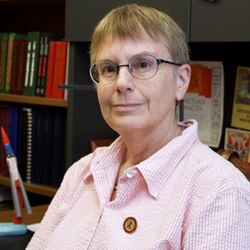
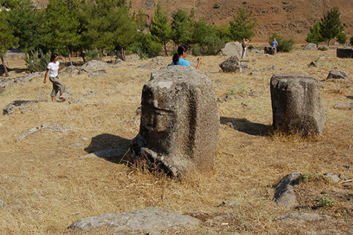
University Professor Tania Li (Anthropology), whose research has focused on Indigenous highland communities in Indonesia,
received the prestigious 2018 Insight Award from the Social Sciences and Humanities Research Council
(SSHRC). The award recognizes the highest achievements in social sciences and humanities research,
knowledge mobilization, and scholarship supported by SSHRC.
Go
to U of T News Article
Three U of T scientists are members of the global team that won the prestigious international 2018
Gruber Cosmology Prize. The prize was awarded for the Planck project, which planned, developed, and
analyzed data generated by the Planck observatory spacecraft and is deepening our understanding of the
universe.
Go
to U of T News Article
Professor Frances Shepherd (Medicine), an innovator in the study and treatment of lung cancer, was
awarded the 2018 Canada Gairdner Wightman Award for outstanding career leadership in medicine and
medical science. She has been instrumental in designing and conducting studies that evaluate new
targeted medications and anti-angiogenesis agents in lung cancer.
Go
to U of T News Article
University Professor Lynne Viola (History) was named one of two recipients of the Canada Council for
the Arts’ prestigious Thomas Henry Pentland Molson Prize, which recognizes individuals who have made
significant contributions to the cultural and intellectual heritage of Canada. Viola is one of the
world’s leading scholars on the Soviet Union.
Go
to U of T News Article
University Professor Emeritus Paul Young (Civil & Mineral Engineering) has been elected a Fellow of
the Royal Academy of Engineering. Over the past 40 years, Young has pioneered many of the techniques
used today in monitoring and interpreting induced seismicity in the mining, petroleum, and nuclear
waste disposal industries.
Go
to U of T News Article
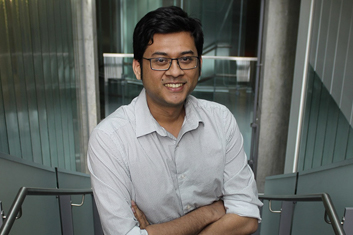
Professors Robert Haslhofer and Giulio Tiozzo (Computer and Mathematical Sciences, UTSC, pictured), along with Arul Shankar (Mathematical and Computational Sciences, UTM), and Amar Vutha (Physics) won prestigious Sloan Research Fellowships in 2018. The two-year, $65,000 awards are given to early-career scientists and scholars to recognize exceptional performance and unique potential, enabling them to pursue further research and make substantial contributions to their field.
Go
to U of T News Article
The Canada Research Chairs (CRC) and Canada Excellence Research Chairs (CERC) programs enable U of T to attract and retain the best and most promising researchers from around the world. In addition to conducting research that improves our depth of knowledge and quality of life, the chairs also train the next generation of leaders in their fields through student supervision and teaching.
Thirty U of T scholars were named CRCs in 2018. Additionally, 19 CRCs were renewed. The CRCs are conducting important research, and government funding is crucial to their success and continued work in Canada.
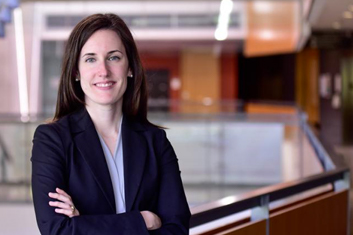
Professor Hung’s work focuses on identifying individual molecular profiles related to cancer risk and progression in order to help reduce cancer death by early detection and improved patient management.
Professor Soman’s behavioural economics research will help organizations to better understand how real people act and design better products, services, and programs for them.
Professor Johnson’s research focuses on understanding how early life experience shapes the ability of children to perceive, produce and comprehend spoken language.
U of T researchers and scholars were awarded $1.3 billion in research funding, allowing our investigators to continue generating knowledge, tools and solutions that are needed to address the most pressing issues confronting our world. Every year, U of T researchers and innovators are successful in securing funds from a rich array of national and international sources, including the federal and provincial governments, the not-for-profit sector, and private-sector partnerships. Access to the most advanced tools allows U of T to offer superior training to our students and to attract and retain the best research minds in the world.
Four U of T projects have leveraged the world-leading expertise at the university to secure almost $6 million in new partnership grants from the Social Sciences and Humanities Research Council of Canada (SSHRC). The funding will enable researchers to pursue their innovative projects while mobilizing research knowledge in accessible ways.
Go to U of T News Article
30 U of T scholars will be able to secure equipment and facilities in order to undertake cutting-edge, collaborative and impactful research and training, having secured $7.3 million in funding from the Canada Foundation for Innovation’s (CFI’s) John R. Evans Leaders Fund.
Go to U of T News Article
The Natural Sciences and Engineering Research Council (NSERC) acknowledged the breadth and depth of academic excellence at U of T when 161 researchers received nearly $30 million to support discovery programs, graduate and post-graduate scholarships, postdoctoral researchers and new research tools.
Go to U of T News Article
In support of their ongoing research to help some of the most vulnerable members of society, five U of T researchers have received New Investigator Grants in Maternal, Reproductive, Child and Youth Health from the Canadian Institutes of Health Research (CIHR).
Go to U of T News Article
U of T is the place where research excellence is feeding innovation and entrepreneurship. In all sectors and across our campuses, our faculty and students are generating ideas and getting them into the marketplace in the form of products, services, jobs, and companies that are contributing to the Ontario and Canadian economies and improving lives around the world. U of T assists researchers to ensure that U of T patents and inventions get used quickly, and supports the development of strong and lasting partnerships with innovative companies.
In 2018 U of T retained its status as Canada’s most innovative university in advancing science and inventing technologies that “power new markets and industries,” while also jumping 11 spots to 35th in Reuters’ global ranking.
Go to U of T News Article
U of T is partnering with MaRS to lease 24,000 square feet of the Waterfront Innovation Centre in the heart of the city’s next innovation hot spot – just one of many developments U of T is eyeing to support innovation in Toronto.
Go to U of T News Article
The prestigious Manning Innovation Awards recognized two U of T researchers and one alumnus. The innovations will help to address challenges such as short bowel syndrome, greenhouse gas emissions, and the tracking of infectious diseases.
Go to U of T News Article
Opioid addiction has reached a crisis level, and AmacaThera, a startup emerging from work done in the U of T lab of Molly Shoichet, has raised $3.25 million to develop a gel-based drug delivery system that can eliminate the need to give patients powerful painkillers following surgery.
Go to U of T News Article
The strength of U of T’s entrepreneurship system was again demonstrated when startups from U of T’s three campuses won both major pitch competitions at the 2018 Ontario Centres of Excellence Discovery conference, an innovation-focused event that draws participants from across the province.
Go to U of T News Article
The federal government is investing $25 million to help the Creative Destruction Lab (CDL) scale-up more than 1,300 science-based startups – a move expected to create up to 22,000 jobs and launch a new program aimed at encouraging young women to pursue STEM fields.
Go to U of T News Article
The Connaught Fund was created in 1972 from the sale of Connaught Medical Research Laboratories, which were the first to mass-produce insulin—the Nobel Prize-winning discovery by U of T researchers Frederick Banting, Charles Best, J.J.R. Macleod and James Bertram Collip. The Connaught Fund is the largest internal university research funding program in Canada with programs specifically designed for early-career researchers, interdisciplinary teams, innovators, and fundamental STEM research—all with an emphasis on meeting the challenges facing global society. The university serves as the steward of the fund and has awarded more than $160 million to U of T researchers to date.
Go to U of T News Article